Multi-Factor Equities on SGX
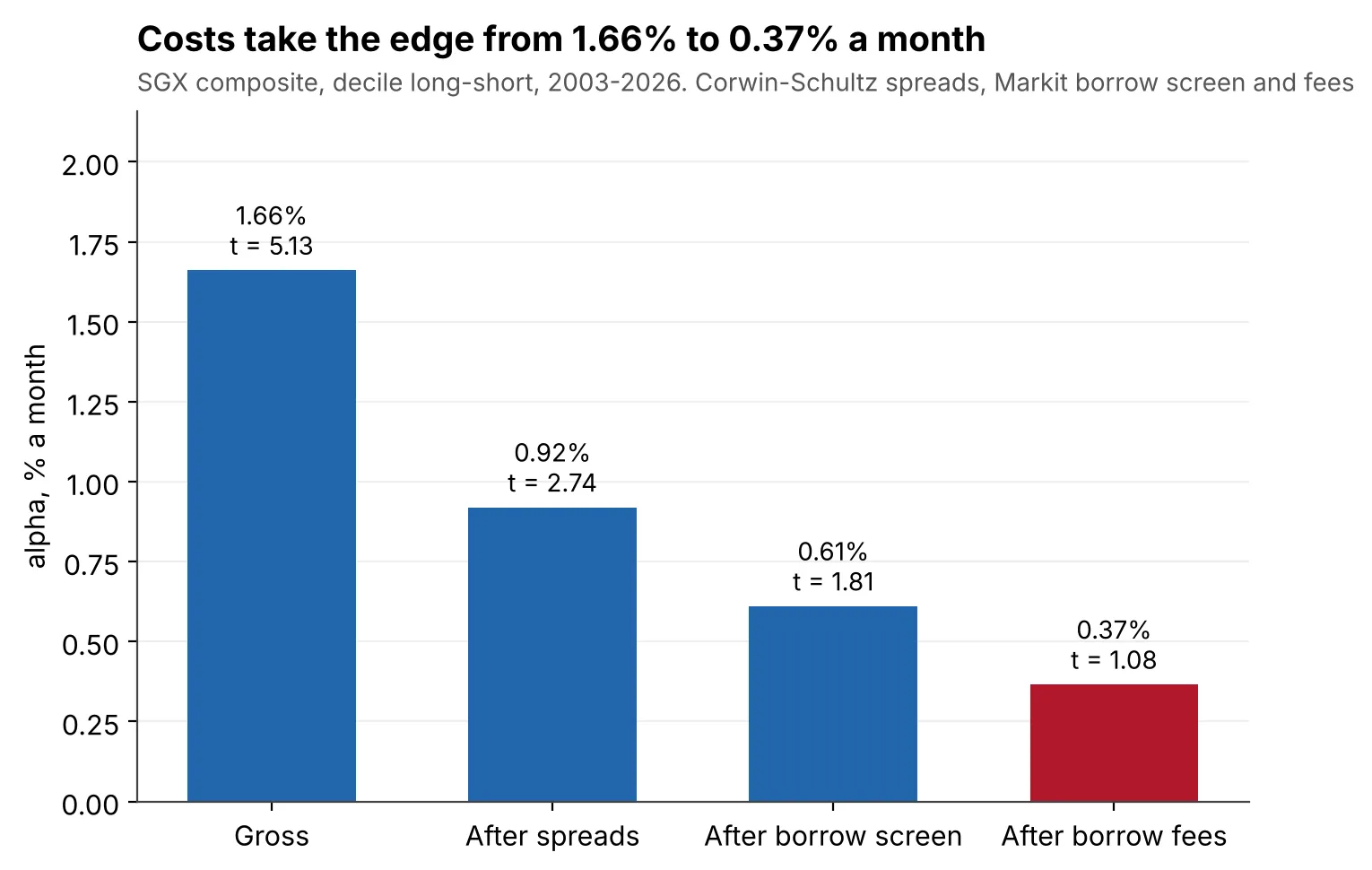
The signal is real, but after spreads and borrowing costs, 1.66% a month becomes 0.37%.
capability: Systematic equities
category: Quantitative Research
date: October 2026
question
Do value, momentum and quality predict Singapore stocks, and can you actually trade them?
methodology
- Singapore stocks from 1991 to 2026, including the 338 that delisted.
- Eight factors with weights fixed in advance.
- Real bid-ask spreads, borrow availability and borrow fees.
- 65 variations tested, corrected for multiple testing, strategy frozen before writing up.
result
- The factors predict returns (t = 5.2).
- Costs remove most of it: 1.66% → 0.92% after spreads → 0.61% after borrow limits → 0.37% after fees (t = 1.1).
- Survivorship bias runs the other way in Singapore: most delistings are takeovers, which pay out.
figures
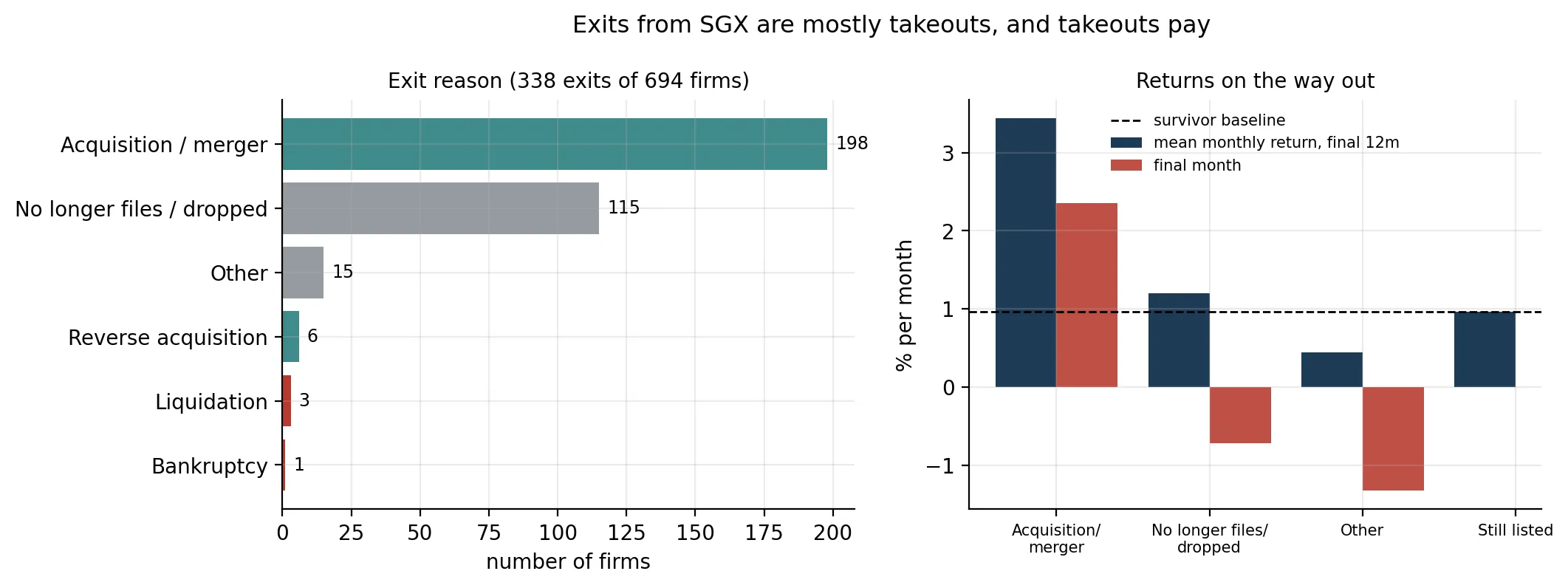
Figure 1. Most SGX delistings are takeovers, and takeovers pay on the way out. That is why the bias runs backwards. 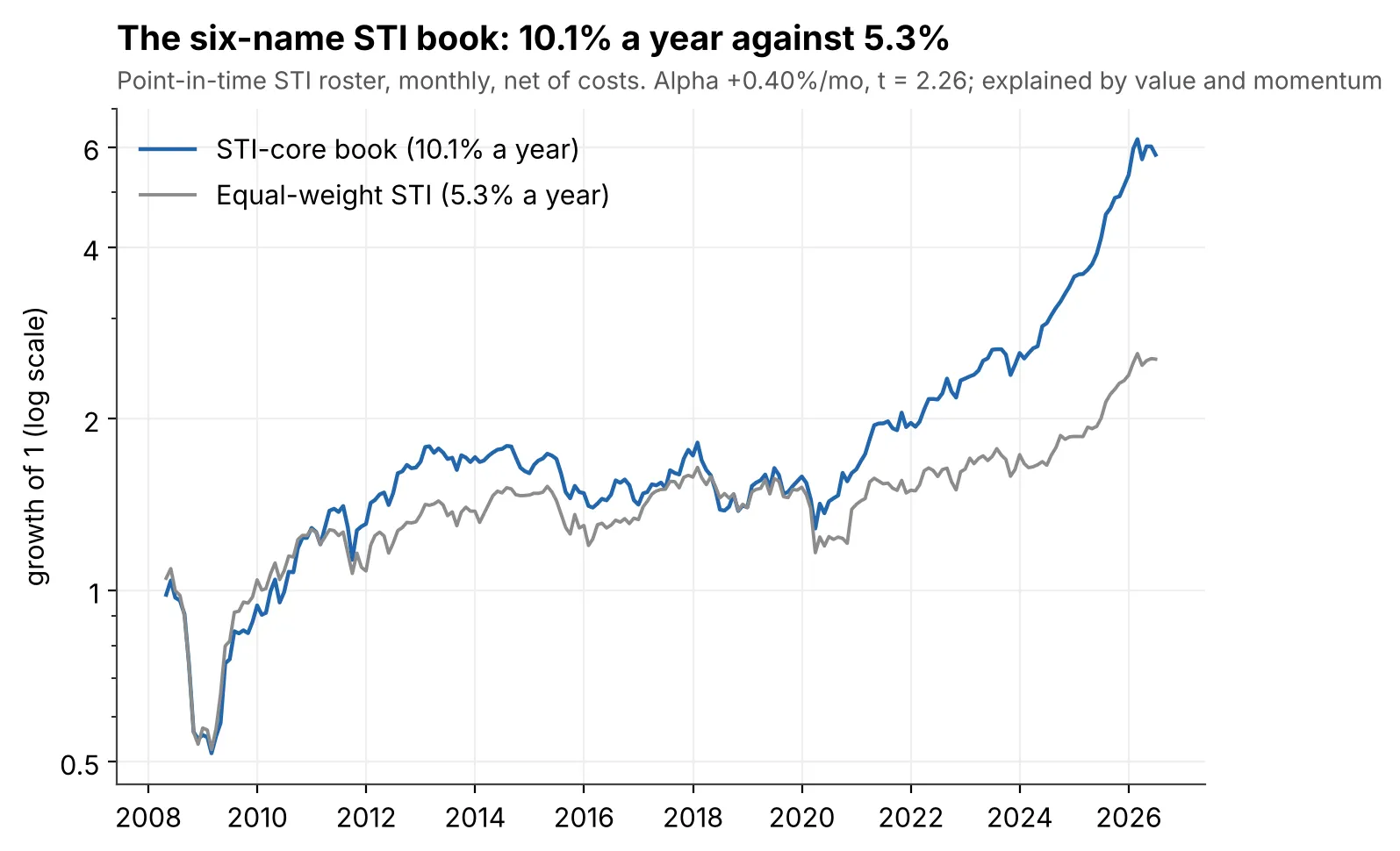
Figure 2. The six-name STI book against the equal-weight STI, net of costs.
caveats
- Nothing survives multiple-testing correction.
- 115 delistings are still being checked.
stack
PythonpandasstatsmodelsBloomberg VBACompustatMarkitCapIQ